
Android 4.3 Iso For Virtualbox Free Download
From here you can download and attach the VDI image to your VirtualBox and use it. We offer images for both architectures 32bit and 64bit, you can download for free for both architectures. At the moment we have plans to offer you 30+ Linux/Unix distributions, we may add more to our list in near future, you can also send us suggestions if we are. Android-x86 (formely known as 'patch hosting for android x86 support') is a free, open source project that allows you to run Android™ on x86 operating systems. It is a port of the well-known 'Android Open Source Project' led and offered for free.
- Android-x86-4.3-20130725.iso Android-x86 4.3 20130725 live and installation iso Featured livecd: Jul 2013 199 MB 2443130. Android: Jb: Ics. Who does want to install Jelly bean Android 4.3 on. 2) Download Android 4.3 ISO from. Install Android 4.3 on Windows 8 with VirtualBox.
- Android ISO Latest Version on Virtual Machine free Download This is a serious red-flag for any developer and that means that it will greatly put the reputation of your name as an application developer online. With a debug mode, you can easily troubleshoot the errors that are available in your system and make sure that you render them free of.
- Because of the storage of Virtualbox is large enough to keep your files safe there. Run Android on VirtualBox: So, now you can run the android operating system on VirtualBox. You Can Check whether the ISO is bootable or Not: So, sometimes you may think that whether I should burn the ISO file to CD or DVD.
- Using virtualbox v. 4.2.16 and android-x86-4.3-20130725.iso it does not ask me if i want to install /system directory as read-write. It instead asks me at that point, if i want it to create a save img of 512 mb or more. If i click yes, it gets to 100% then says failed to make img file, if i say no it says user data will not be saved.
- An icon used to represent a menu that can be toggled by interacting with this icon.
One of the most popular Android device Samsung Galaxy Note 2 (GT-N7100) model – international variant has received the latest Android 4.3 Jelly Bean update N7100XXUENB2.
Unfortunately, for the moment only Galaxy Note 2 users from Thailand can download and install the new firmware via OTA (Over the Air) or by using the official Samsung KIES application. The new update is pushed out in phases, and that means it needs some time when it will be used for all customers..
This step by step guide is especially provided for all users who want to use a manual method to install the new Android 4.3 N7100XXUENB2 Jelly Bean for Samsung Galaxy Note 2 (GT-N7100) model.
On the other hand, if you have not received a automatically OTA notification on your device’s panel notification or you don’t want to wait for this official release, you can follow this step by step tutorial to apply it
The new update provides more stability and security for your device, it comes with numerous new features such as Galaxy S4 like lockscreen, Tabbed UI in Settings, New Samsung keyboard, Smoother TouchWiz, New S-Voice from Samsung Galaxy S4 and more.
Prerequisites:
- Remember that this present new firmware is unofficial one and it can be used and installed on Samsung Galaxy Note 2 GT-N7100 model.
- This guide is provided for educational purpose and we, at the Android Source team cannot be held liable or responsible for any data lost or damage to your device if you decide to apply this guide. Use this step by step guide on your own risk only.
- Download and install the suitable USB Drivers for Samsung Galaxy Note 2 GT-N7100 device on the PC.
- Ensure that the USB Debugging Mode is enabled on the device: Settings>Developer Options.
- Now, be sure to take a a full backup for all your important data
- This guide works for factory unlocked devices (not locked to any specific carrier).
- Ensure that the Samsung Galaxy Note 2 device’s battery has more that 85 % power left.
- The new Android 4.3 Jelly Bean (N7100XXUENB2) OS works and is compatible with Samsung Galaxy Note 2 (GT-N7100) model only. Do not flash this firmware for any other incorrect variants or devices as it may damage your device.
- The model number can be found by navigating on the Galaxy Note menu via Settings>About Phone.
How to install official 4.3 N7100XXUENB2 Jelly Bean on Galaxy Note 2 device.
- Download Android 4.3 Jelly Bean official firmware (N7100XXUENB2) or Here and save it in your PC.
- Now, download Odin v3.09 from here and save it in your PC.
- Extract the downloaded Android 4.3 firmware zip file by using 7-Zip app to get a .tar.md5 file and some other additional files.
- Extract ODIN zip file to get Odin3 v3.09.exe and some other additional files.
- Power off the Samsung Galaxy Note 2 device completely.
- Boot the device into Download Mode (Press Volume Down, Home and Power buttons simultaneous until an Android robot draw together with a warning triangle will be displayed on the device’s screen and then press Volume UP button to enter in Download Mode).
- Open ODIN application as an Administrator on your PC.
- Now, connect the Samsung Galaxy Note 2 to the PC by using the USB cable while the device is in Download Mode.
- Wait until the ODIN application detects the Note 2 device and will show you the “Added” message on the screen and the ID:COM bow will return a light blue color together with the COM port number. Note: if the “Added” message rejects to be displayed then you need to reinstall the USB drivers once again.
- Next, in ODIN application click on AP button and browse and pick up the firmware file N7100XXDLJ5_N7100ODDDLI7_INU.tar.md5.
- Important: In ODIN select the Auto Reboot and F. Reset Time checkboxes and leave the Re-Partition option unchecked.
- Verify once again all the steps and when are done correct move to the next step.
- Press the Start button in ODIN to start the flashing process.
- Now, wait for firmware installation process to be done, and the “PASS” message with green background is displayed in ODIN application’s interface.
- Samsung Galaxy Note 2 device will take a reboot, and the Home screen will appear.
- Disconnect the device from the PC by removing the USB cable from the computer.
These where all the steps to install the new official N7100XXUENB2 Android 4.3 Jelly Bean firmware on Samsung Galaxy Note 2 device.
Verify the new firmware version from Settings>About Phone on the Note 2 device.
Android x86 is the official port of the mobile operating system, Android, on the x86 Platform. Android is designed to run in arm devices, but since it has been ported to x86 architecture, we can now run Android Operating System on our PC and see how Android would work with those Hardware. In this tutorial, I’m going to teach you to install Android x86 on a Virtualbox Environment. But if you want, you can dual boot it with your Windows or Linux Operating System. The steps are pretty much the same for both. So, Let’s get started.The first thing you need to do is to get the latest version of Virtualbox for your Operating System. VMware also works perfectly fine. Just go to Virtualbox ‘s site and download the latest version for your corresponding platform and install it on your Computer.
After downloading Virtualbox, your ready to download Android x86 6.0 Marshmallow for you PC. Download the release candidate for your PC according to your architecture. If you dont know which to choose, just choose the android-x86-6.0.rc1.iso file, which is the 32-bit variant.
After downloading Android x86, you are ready to run it in Virtualbox. Open virtualbox and create a new virtual machine by clicking on New.
Windows 7 Iso Virtualbox Download
Then choose a name for your virtual machine and select Linux as shown in the image below and click on Next to continue.
After that, choose the amount of memory you want to allocate for Android. A minimum of 512 MB should be allocated for Android. After selecting the amount, Click on Next.
Android For Virtualbox Download X64
Then, Virtualbox will ask you to create a virtual Hard Disk for Android x86. Click create and Next. Then, It will ask you to select the size of the Hard disk for Android x86. Select the amount of memory you want to allocate, then hit create. And, voila you’re Android x86 virtual machine is created.
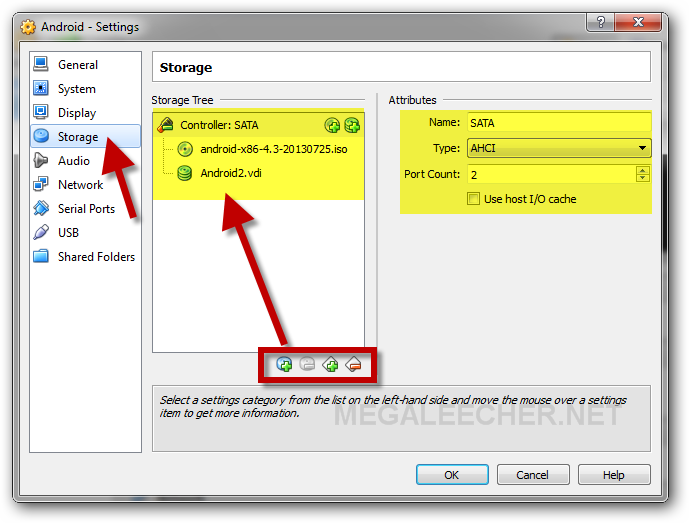
Now, Click on the green Start button to start your Android x86 virtual machine.Your Android VM will start to load. But just before starting it will ask you to select a boot media. Now, Click on the small browse button and select the Android x86 6.0 iso that you had downloaded.
Then, Android x86 6.0 will start to boot up. And the GRUB boot menu will appear. Select the action you want to do. You can either live boot from the iso or install it to your Virtual box. Let’s choose Install Android-x86 to Hard disk.
Then, you’ll get a screen as shown below with all the drives you currently have in your virtualbox machine. We need to create a partition of the free space for Android x86 to be installed. So, select Create/Modify partitions.
Virtualbox Android Emulator Download
You’ll be presented with a screen to create and modify the available partitions. Select the partition and select the New option in the lower panel to create a new partition.And select the amount to be allocated.
Then, the partition will be created but no changes will be written to the drives until you select Write. So, select the write option to write the changes. Then, the partitions will be created.
Android 4.3 Iso For Virtualbox Free Download 32-bit
Now, select the quit option to return to the previous screen. You should see te new partition that you’ve created.Now, select the newly created virtual box partition and you’ll be asked to format the disk. Select ext4 to format your partition in the ext4 format. You can choose other options also but ext4 is preferable.
Android X86 For Virtualbox
Now, Setup will ask if you want to install the GRUB boot loader. Select Yes, because without one you’ll not be able to boot into the newly installed Android x86 VM.
Now, Setup will ask if you want to install Android x86 ‘s system partition as read only or read/write enabled. Now, if you want full access to your system partition for things like rooting or just editing system files then you need to enable read/write. Otherwise, you’re good to go for the read only mode. Read only mode takes up less space than the read/write mode.
Now, the installation will start. After the installation completes, it will ask you to either run android x86 or reboot. You’re good to go either way. Congratulation!! you’ve just installed Android x86 6.0 Marshmallow in Virtualbox.
Now, you can start using Android x86 on your PC, start installing apps or just tinker around and test the performance of Android x86 on your Desktop or Laptop. For any queries or suggestion, feel free to comment below. Thank you for reading this post.